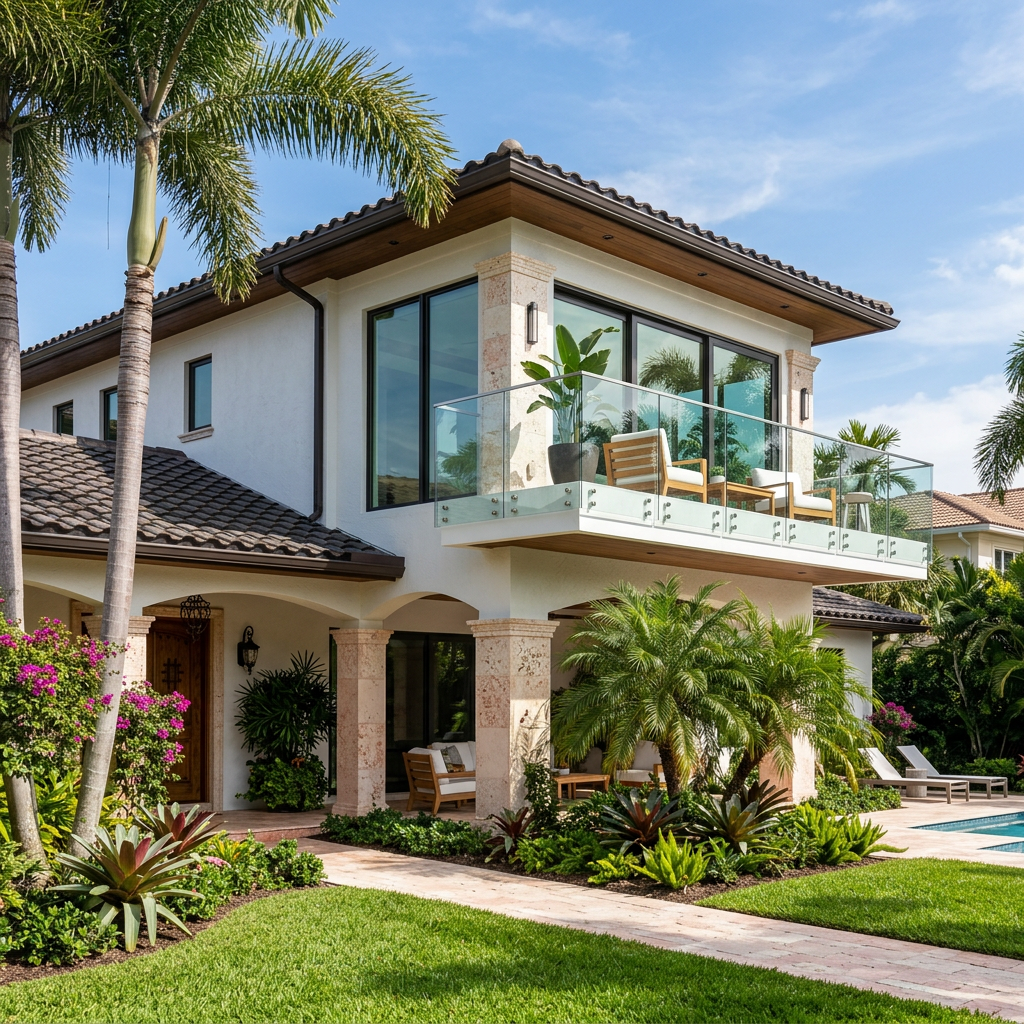
Are Home Additions Worth It? Value, ROI & Addition vs. New Home (Naples FL Guide)
Do Home Additions Add Value? The Short Answer
Yes. Home additions add value in nearly every case — the question is how much.
Based on Collier County sales data and industry ROI benchmarks, home additions in Naples typically recover 55% to 85% of construction cost in added home value at resale. In premium Naples neighborhoods — Port Royal, Pelican Bay, Grey Oaks, Old Naples, Moorings — that range climbs to 75–110%, meaning some additions actually add more market value than they cost to build.
Here's what that looks like by addition type in Naples' 2026 market:
| Addition Type | Typical Cost Recovery | Why |
|---|---|---|
| Master suite addition | 75–95% | Universal buyer appeal, high-demand feature |
| In-law suite / ADU (detached) | 80–110% | Multi-gen buyers pay premium; rental potential |
| Second story addition | 70–85% | Adds substantial square footage |
| Kitchen expansion | 70–90% | Kitchens drive buyer decisions |
| Bathroom addition | 60–75% | Useful but lower visibility |
| Sunroom / Florida room | 50–65% | Less universal appeal |
| Garage conversion | 40–60% | Often reduces garage count, hurts resale |
But "recovery percentage" is only half the picture. The other half is what you get while you own the home — years or decades of additional space, avoided relocation costs, and preserved neighborhood connections. When you include those, the effective return is significantly higher than the resale number alone suggests.
Are Home Additions Worth the Investment? The Full ROI Analysis
The honest answer requires looking at more than just resale recovery. There are four separate ways a home addition returns value. Understanding all four is what separates a smart addition from a money pit.
Return #1: Direct home value increase
This is the resale recovery percentage above. A $200,000 master suite addition in Pelican Bay typically adds $150,000–$190,000 to the home's appraised value. That's not all of the cost back, but it's substantial equity.
Return #2: Avoided transaction costs
This is the one most homeowners miss. If you sell and buy a bigger home instead of adding on, the transaction costs are brutal:
- •Realtor commission (selling): 5–6% of sale price
- •Closing costs (buying): 2–4% of purchase price
- •Moving expenses: $3,000–$15,000
- •Temporary housing between transactions: $5,000–$15,000
- •New furniture/window treatments for larger home: $20,000–$60,000
On a Naples home selling at $1.2M and buying at $1.8M, transaction costs alone run $135,000–$190,000. That money vanishes — it doesn't give you a single additional square foot of living space.
A $250,000 addition effectively includes that $150,000 in "not spent on transactions" as pure return. Viewed that way, a typical addition recovers 55–85% on paper and saves 60–75% of the addition's cost in avoided transaction expenses. Combined effective return often exceeds 120% of construction cost.
Return #3: Years of use
You live in your home for years before selling. A $200,000 addition over 10 years of use costs about $20,000/year. Even ignoring resale entirely, that's significantly less than renting comparable additional space, which in Naples runs $2,500–$5,000/month ($30,000–$60,000/year).
Return #4: Non-financial returns
These matter more than most spreadsheets allow:
- •Staying in your neighborhood — schools, neighbors, proximity to beach/golf club/friends
- •Aging parents in your home — avoiding $5,000–$10,000/month assisted living costs
- •Work-from-home capability — dedicated office space vs. kitchen table
- •Family growth — additional bedroom space for children, grandchildren, guests
None of these show up in ROI calculations. All of them are why people actually build additions.
When Home Additions Are NOT Worth It
Honest advice requires the other side too. There are three scenarios where additions don't pencil out:
1. Over-improving for the neighborhood
If your home is already at or above the neighborhood ceiling, adding $300,000 of construction won't return $300,000 in value. A $1.2M home in a neighborhood where the top sale is $1.4M can't become a $1.5M home regardless of how much you spend. The market won't support it.
Rule of thumb: After your addition, total home value should not exceed 115% of the top recent sale in your specific neighborhood. Your Realtor or a pre-project appraisal can tell you this number.
2. Planning to sell within 2–3 years
Additions take 6–12 months to complete and 12–24 months to "settle" (landscaping matures, upgrades feel integrated). Selling too soon means you don't capture full market value — buyers discount recently-completed additions because they can't verify workmanship quality over time.
3. Poor base home
If your existing home has structural issues, outdated electrical, failing plumbing, or foundation problems, adding onto it amplifies those issues. In these cases, either renovate the base home first or consider whether a new build makes more sense (covered below).
Home Additions vs. New Home: Complete Comparison
This is the decision Naples homeowners wrestle with most. Both options solve the "I need more space" problem. They do it very differently.
Total cost comparison (real Naples numbers)
Scenario: You own a $1.2M home and need roughly 1,000 additional square feet.
Option A: Home addition
| Line item | Cost |
|---|---|
| 1,000 sqft addition | $250,000–$400,000 |
| Design, permits, engineering | Included |
| Moving costs | $0 (or minimal) |
| Transaction costs | $0 |
| Total out-of-pocket | $250,000–$400,000 |
Option B: Sell and buy larger home
| Line item | Cost |
|---|---|
| Sell current home @ $1.2M | — |
| Realtor commission (5.5%) | -$66,000 |
| Seller closing costs (1%) | -$12,000 |
| Buy larger home (+1,000 sqft, ~$1.8M) | — |
| Buyer closing costs (2.5%) | -$45,000 |
| Moving expenses | -$8,000 |
| Interim housing (2 months) | -$10,000 |
| New furniture/window treatments | -$30,000 |
| Difference in home price (pre-tax) | -$600,000 |
| Total out-of-pocket above sale proceeds | ~$771,000 |
Even subtracting new home equity gained ($600K), the transaction cost alone is ~$171,000 — money that bought zero additional space.
Net comparison: A $350,000 home addition gives you 1,000 additional square feet for $350,000. Buying a larger home gives you 1,000 additional square feet for ~$171,000 in transaction costs plus ~$600,000 in additional mortgage principal. The addition is dramatically more efficient — you're paying only for the space, not the friction of moving.
Timeline comparison
| Factor | Home Addition | New Home Purchase |
|---|---|---|
| Active construction | 3–8 months | N/A |
| Design + permits | 2–4 months | N/A |
| Buying process | N/A | 2–4 months |
| Moving and settling | 1 month | 1–2 months |
| Disruption level | Moderate (live in home) | Severe (move twice) |
| Total timeline | 6–13 months | 3–6 months |
New home purchase is faster. Home addition is cheaper and less disruptive to life.
Neighborhood equity comparison
This is the hidden factor most comparisons miss. Your "neighborhood equity" is everything you can't see on Zillow:
- •Kids' schools and friend groups
- •Established routines (pharmacy, dry cleaner, coffee shop, gym)
- •Your own neighbor relationships
- •Proximity to your specific beach access, golf club, church
- •Time invested in landscaping, customizations, knowing your house
For Naples retirees and professionals, neighborhood equity often matters more than square footage. A home addition preserves 100% of it. A move costs 100% of it.
When new home wins
Buying a new (or new-to-you) home makes more sense than adding on in these specific situations:
- •You want a completely different location. If you're tired of your neighborhood, adding on doesn't solve that.
- •Your current home has major structural issues. Foundation problems, outdated systems, or layout that can't be fixed.
- •You want a specific feature impossible to add. A waterfront view, a particular lot size, a specific school district.
- •Your addition would exceed neighborhood ceiling by 20%+. You'd be over-improving significantly.
- •You need the change in under 6 months. Additions take time. New home purchase is faster.
Highest-ROI Addition Types in Naples
If you're going to build, these deliver the best returns:
1. Master suite additions — 75–95% ROI
Large bedroom + spa bathroom + walk-in closet. Universal buyer appeal. Works in nearly every Naples neighborhood from Golden Gate Estates to Port Royal homes.
2. In-law suites / detached ADUs — 80–110% ROI
Multi-generational buyer demand is strong and growing. Rental income potential adds appeal. See our in-law suite pricing guide for details.
3. Kitchen expansions — 70–90% ROI
Expanding an undersized kitchen or opening it to living space. High buyer visibility.
4. Second story additions — 70–85% ROI
Adds substantial square footage. Best ROI when lot size prevents horizontal expansion. See our second story addition costs guide.
5. Primary suite-plus-office combo — 80–90% ROI
Post-2020, dedicated home office space significantly increases buyer interest when combined with primary suite.
Lower-ROI Additions (Build for Lifestyle, Not Resale)
These additions can absolutely be worth it personally, but don't expect strong resale recovery:
- •Sunrooms and Florida rooms: 50–65% ROI. Enjoyable but niche.
- •Garage conversions: 40–60% ROI. Losing garage space hurts resale in Florida.
- •Highly personalized spaces: Wine rooms, home theaters, music studios. Great lifestyle, limited buyer universe.
If you're building any of these, build them for yourself and expect to enjoy them for 10+ years — not for return on investment.
Naples-Specific ROI Factors
A few things unique to this market affect addition ROI:
Hurricane code compliance helps resale. Impact windows, engineered construction, and upgraded roofing that come with new additions reduce buyer insurance quotes — buyers notice and pay for it.
Flood zone designation matters. Elevated construction in AE/VE zones costs more but can actually improve insurability and resale over time, especially as buyer awareness of flood risk increases.
Seasonal market timing affects appraisals. Naples appraisers typically cite recent comps. The November–April "season" drives most transactions, so appraisals conducted November–April tend to reflect higher comp values.
Luxury finishes matter more here than nationally. The national "mid-range is best ROI" advice doesn't always apply in Naples. In Port Royal, Pelican Bay, Grey Oaks, and Old Naples, buyers expect luxury finishes — installing builder-grade materials actually hurts resale.
The Bottom Line: Is Your Addition Worth It?
Here's a decision framework we use with clients:
Build the addition if:
- •You plan to stay in the home at least 5 more years
- •The post-addition home value stays within 115% of neighborhood ceiling
- •Your base home is structurally sound
- •The space solves a real, ongoing need (not a "maybe someday" feature)
- •You've priced the alternative (move) and understand the true comparison
Consider a new home if:
- •You want a different location or lot
- •Your base home has major problems
- •You'd be over-improving by 20%+
- •You need the change in under 6 months
Do nothing if:
- •You're planning to sell within 2–3 years anyway
- •You're not sure you'll stay in Naples
- •The addition is purely speculative resale investment with no lifestyle benefit
Pre-Project Value Check: What to Do Before You Build
If you want honest answers on whether an addition pencils out for your specific property, do these three things:
1. Get a pre-project appraisal estimate. Not a full appraisal — a Realtor can run "after-improvement" comps for $0 if you have a relationship with one. Ask: "If I added X to this home, what would it comp at?"
2. Check your neighborhood ceiling. Look at the top 3 recent sales in your specific subdivision. Your after-addition value should not exceed ~115% of those.
3. Get a real construction estimate. Napkin numbers from national cost calculators are wrong for Naples. Get a specific scope and quote from a licensed local contractor. We offer free on-site consultations with written estimates.
Ready to Talk Through Your Specific Situation?
Every Naples home is different. Your lot, your neighborhood, your goals, and your timeline all affect whether an addition or a move makes more sense. We do free in-home consultations where we walk your property, discuss what you need, and give you honest input — including telling you when an addition doesn't make sense.
Call 239-378-5266 or request a free estimate. Start with our home additions in Naples overview, or use our addition cost calculator for ballpark pricing.
JY Mega FC Construction | Licensed GC (CGC1536790) | 20+ years | 450+ projects | Naples, FL
Frequently Asked Questions
1.Do home additions add value to your home?
Yes. Home additions typically recover 55–85% of construction cost in added home value, with master suites and in-law suites reaching 75–95%. In premium Naples neighborhoods like Port Royal and Pelican Bay, well-designed additions can recover 85–110% of cost — meaning they add more market value than they cost to build.
2.Are home additions worth the investment?
For most Naples homeowners planning to stay 5+ years, yes. Direct home value recovery is 55–85%, but the full picture includes avoided transaction costs (typically $100,000–$200,000 saved vs. buying bigger), years of additional livable space, and preserved neighborhood equity. The combined effective return often exceeds 120% of construction cost when these factors are included.
3.Is it cheaper to add onto a house or buy a new one?
In nearly all cases, adding onto your current house is significantly cheaper than buying a larger home. A typical $350,000 home addition adds 1,000 square feet for $350,000. Buying a larger Naples home to gain the same 1,000 square feet typically costs $150,000–$200,000 in transaction costs alone, plus the additional mortgage principal — making the addition roughly 40–50% cheaper in total out-of-pocket cost.
4.What home addition has the highest ROI?
In Naples, detached in-law suites and ADUs deliver the highest ROI (80–110% cost recovery) due to multi-generational buyer demand and rental income potential. Master suite additions follow at 75–95%, and kitchen expansions at 70–90%. Sunrooms, garage conversions, and highly personalized spaces deliver the lowest ROI.
5.When does a home addition NOT make sense?
A home addition doesn't make sense when your post-addition home value would exceed 115% of your neighborhood ceiling (over-improving), when you plan to sell within 2–3 years, when your base home has major structural or system issues, or when you actually want to change locations. In those cases, a new home purchase or staying put usually beats adding on.
6.How long do I need to stay in my home after an addition to make it worth it?
At least 5 years. Additions take 6–12 months to build and 12–24 months for the space to "season" — landscaping matures, finishes settle, and the addition feels integrated to buyers. Selling within 2–3 years of completion typically means you won't capture full market value.
7.Should I add on or build a custom home in Naples?
Add on when you love your location and neighborhood, your base home is structurally sound, and you'd stay within neighborhood value ceilings. Build custom when you want a different location, your current home has major issues, or your vision requires a blank slate.